Dorp · Co. Galway
Athenry
Athenry, 25 km east of Galway, preserves its 13th-century layout, town wall, castle, and priory. The medieval town is also famous for the song "The Fields of Athenry."
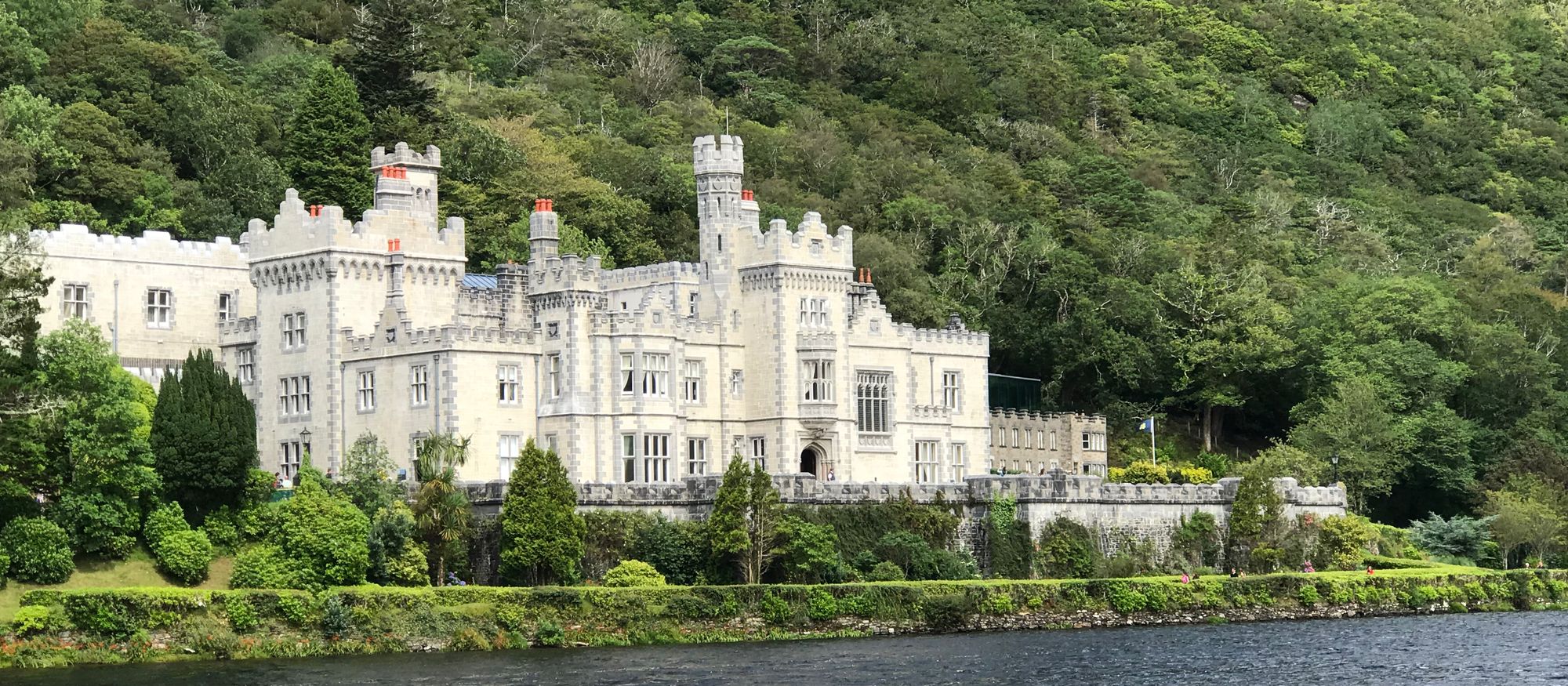
Bezienswaardigheid · Co. Galway
Kylemore Abbey in Connemara is a working Benedictine monastery and former castle on the N59. It offers ticketed gardens and castle tours, free shore views, and quiet church access near Letterfrack.
Kylemore Abbey on Pollacapall Lough, County Galway — photo by Nick Fox
Kylemore Abbey sits on a small point of land at the edge of Kylemore Lough. It is on the N59 in Connemara, about three kilometres from the village of Letterfrack in County Galway. The building is one of the most photographed in the west of Ireland. The view from the lough, with the hills behind it, is the image that made the place famous.
But the abbey is more than a view. The building began life in the 1860s as a castle. Henry Blonville built it after making his fortune in the Lancashire textile industry. It was a substantial house for its time. In 1920, a community of Benedictine nuns bought the estate. They have lived there ever since. The castle became an abbey.
Now it is a working monastery, a tourist attraction, and a place of quiet. The three uses sit together better than they have any right to.
The abbey is surrounded by a large estate. The gardens and grounds are a good half day in themselves. There is a rose garden, a water garden, a woodland walk, and a series of views over the lake and the hills to the west.
The castle itself is open to visitors. The rooms are kept as they were, with a sense of the family who lived there. The abbey church is open to the public. The nuns' life goes on around you. It is a good place to sit for a while and listen.
The light is best in late afternoon. The sun is low over the lake, and the abbey is in full view. The gardens are at their best in late spring and early summer. The lake is calmest in a still autumn morning.
The gardens and castle are ticketed. The abbey itself and the grounds are free to view from the shore. Letterfrack is the nearest village, three kilometres off the N59. It makes a good base. Westport, about twenty-five minutes along the N59, is where the wider choice of stays is.
Waar logeren
Letterfrack puts you close to Kylemore and the national park; Clifden gives you more choice for an evening out.
Bekijk de actuele beschikbaarheid voor je data. Beschikbaarheid en prijzen komen van de aanbieder, niet van ons.
Athenry, 25 km east of Galway, preserves its 13th-century layout, town wall, castle, and priory. The medieval town is also famous for the song "The Fields of Athenry."
Built in 1754 on Ballynahinch Lake, this former country house sits beneath Benlettery (557 metres) in County Galway. Once home to "Humanity Dick" and the Maharaja Jam Sahib, it operates today as a hotel within a private estate.
Carna is a Gaeltacht focal point in west Connemara, 74 km from Galway. It holds a Garda station, health centre, lifeboat, and university research facilities.
Cleggan is a fishing village 10 km from Clifden, centered on a pier built by Alexander Nimmo in 1822. Daily ferries depart for Inishbofin and Inishturk, while local legend links the name to St. Ceannanach and a nearby holy well.