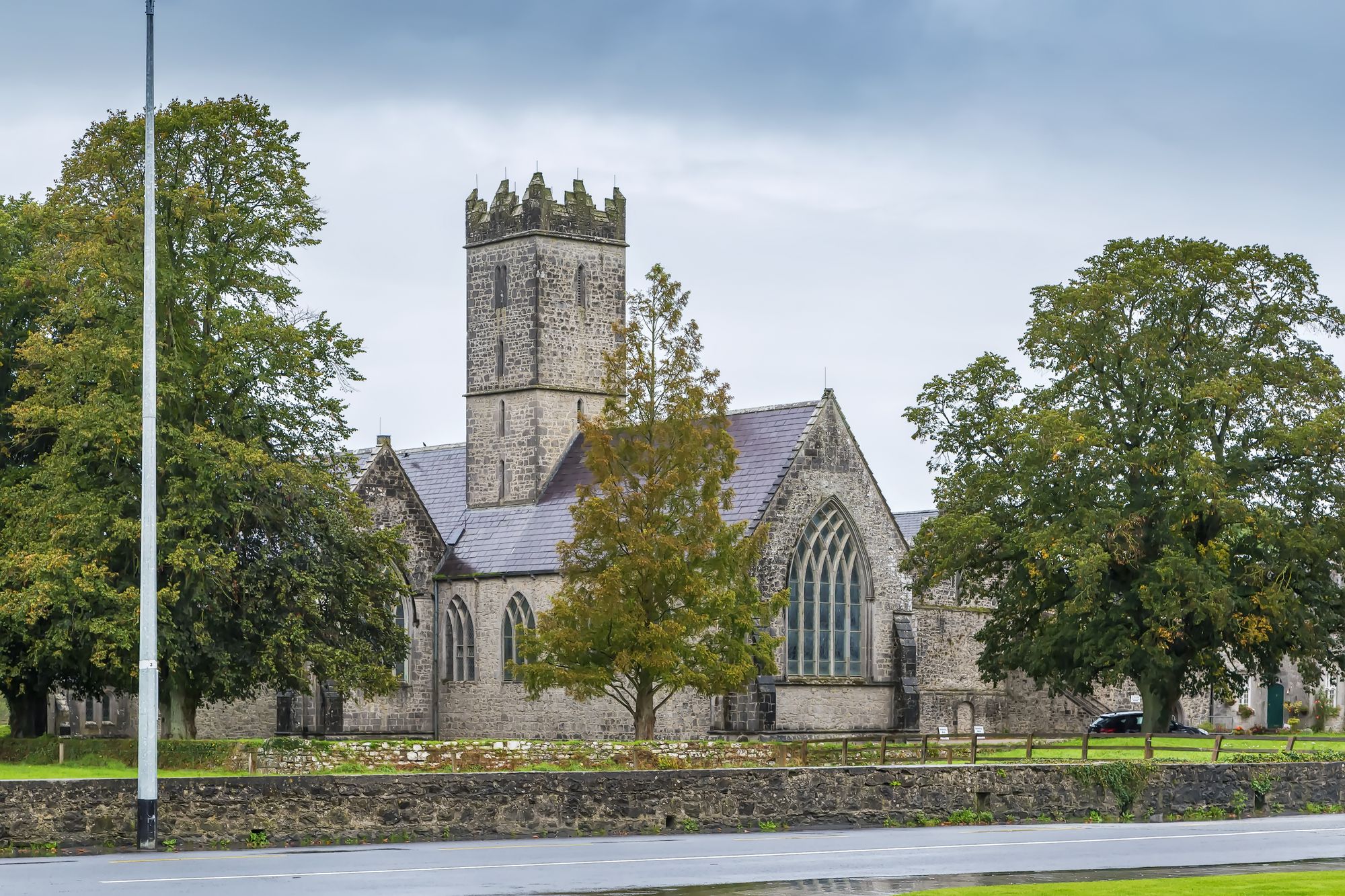
Dorf · Co. Limerick
Adare
A heritage town on the tidal River Maigue, southwest of Limerick. The village centers on its medieval market, three monasteries, and the Desmond castle overlooking the ford.
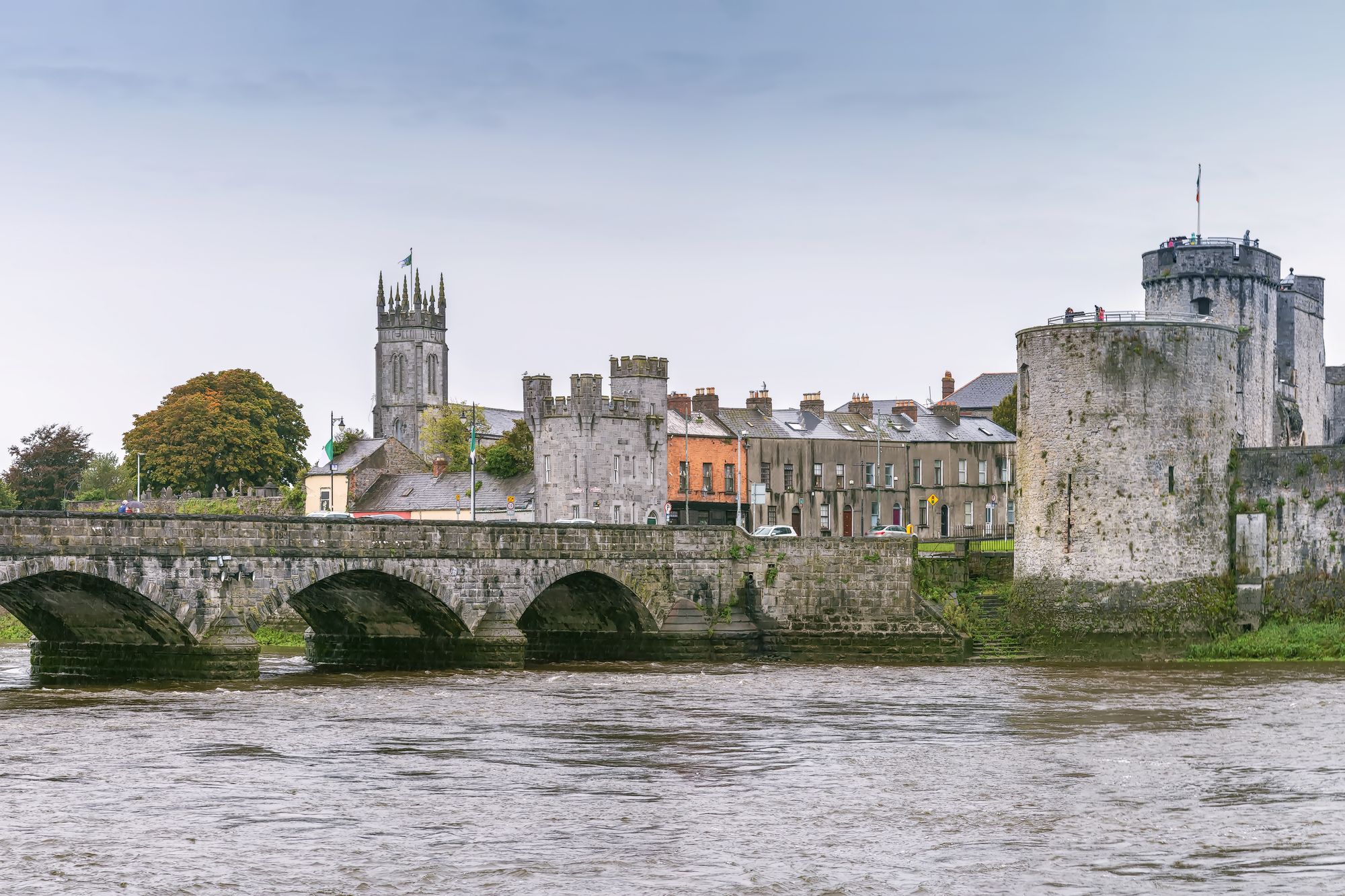
Region · Co. Limerick
The Shannon is the longest river in the British Isles at 360 km, acting as a physical barrier between western and eastern Ireland. It offers a slow cruising route or a scenic drive, with Limerick marking the transition from river to sea.
The Shannon, County Limerick — photo by borisb17
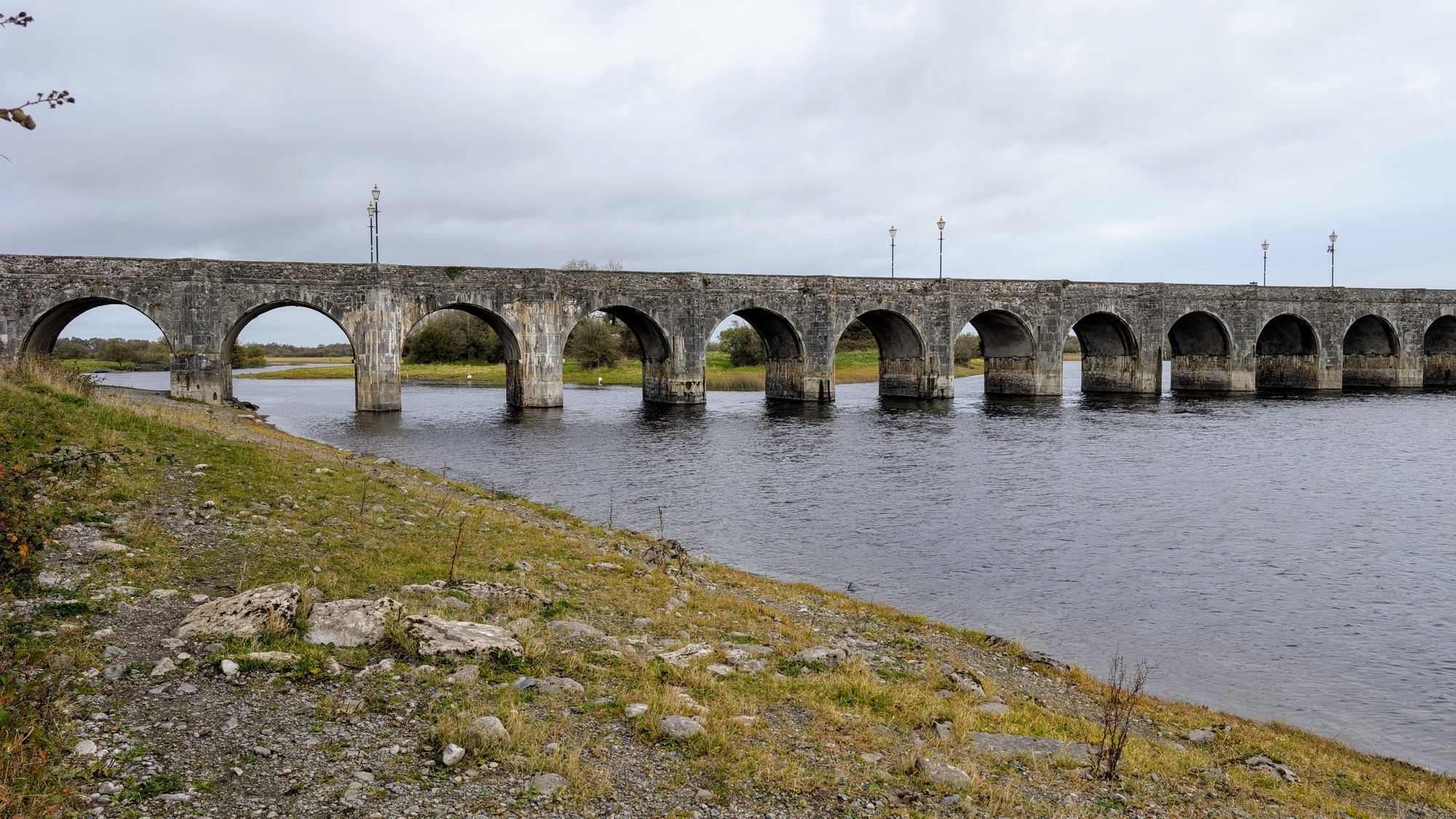
Known as an tSionainn in Irish, the Shannon is the island's major waterway. At 360 km (224 miles), it holds the title for the longest river in the British Isles. The river drains a basin covering 16,900 square kilometres, roughly a fifth of Ireland's total area.
Tradition places its source in the Shannon Pot, a small pool in County Cavan. From there, the water flows generally southwards before turning west. It eventually empties into the Atlantic through a 102 km estuary. Limerick city sits exactly where the river water meets the sea. This waterway has been significant since antiquity. Ptolemy, a Graeco-Egyptian geographer working in the second century AD, mapped the Shannon.
Physically, the river splits the island. It separates the west, principally Connacht, from the east and south. Fewer than thirty-five crossing points exist between the village of Dowra in the north and Limerick city in the south. County Clare is the notable exception; it lies west of the Shannon yet belongs to Munster.
East of Limerick, the river is tidal up to the Ardnacrusha canal. That is where fresh water stops and the sea takes over. Traveling the Shannon means moving through the length of the island’s history. The fords, crossings, lakes, and towns all grew at the water's edge.
The Shannon is a cruising water as much as a sight. The Shannon way involves the canals, the three great lakes, and the weirs. It is the slow way across the middle of the island, ending where the estuary opens to the sea.
Driving along the river offers an easier version of the same trip. The route runs from the lakes down to the city. Late afternoon light on the water is the main reason to make the drive.
A river day is either a drive day or a boat day. Pick the stretch: the lakes, the middle water, or the estuary. Let the road or the wake do the rest. The crossing points are the way in. The towns at the water serve as the bases.
Übernachten
Stay in Limerick and the river, the lakes and the estuary are all inside the day.
Aktuelle Verfügbarkeit für Ihre Reisedaten. Verfügbarkeit und Preise stammen vom Anbieter, nicht von uns.
A heritage town on the tidal River Maigue, southwest of Limerick. The village centers on its medieval market, three monasteries, and the Desmond castle overlooking the ford.
Foynes is a small Limerick town on the Shannon Estuary that served as a 1930s flying-boat terminal and now operates Ireland’s second-largest port.
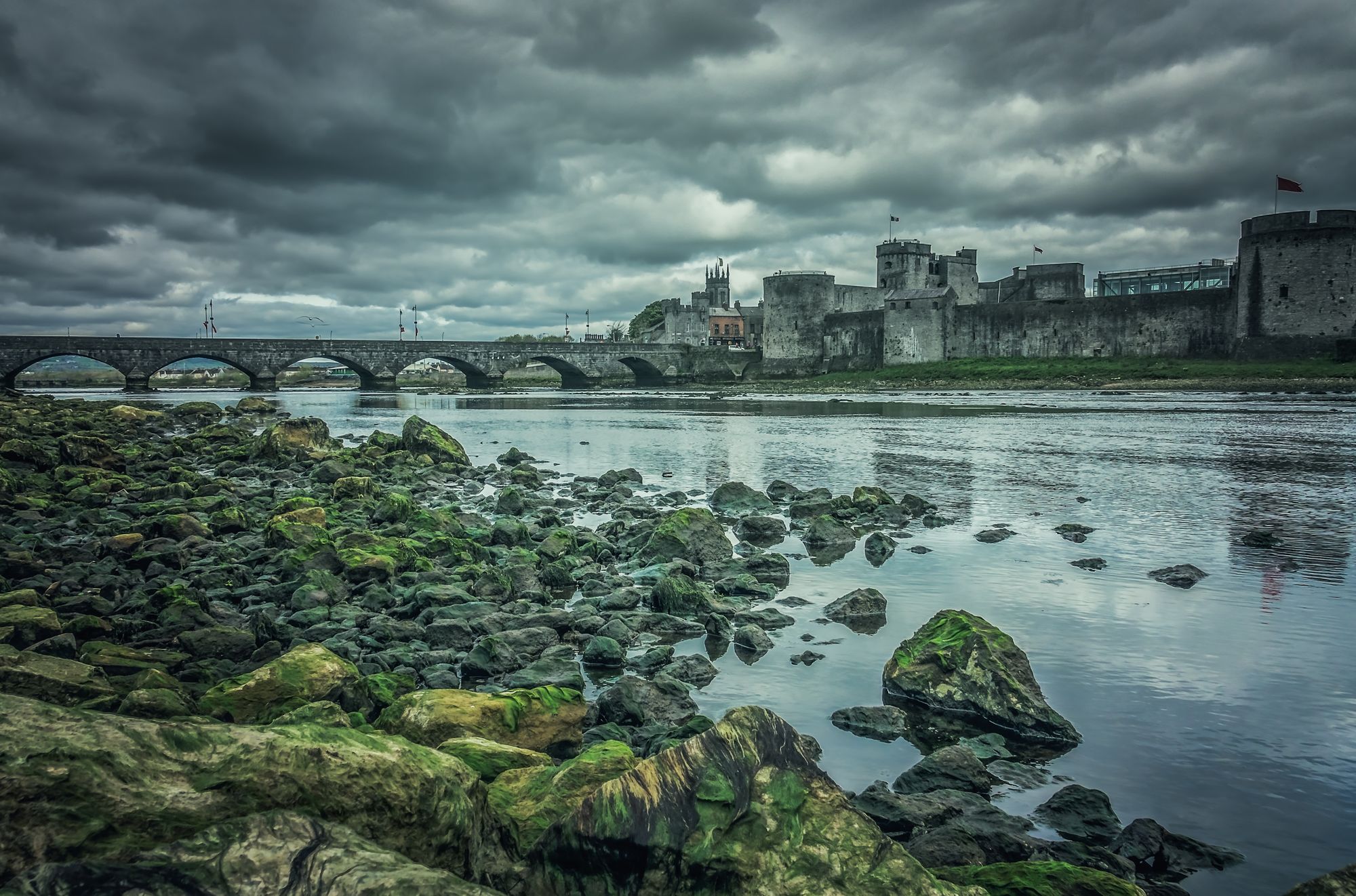
Limerick, founded in 812 by Vikings, is Ireland's third-largest urban area with a population of 102,287. The city straddles the Shannon River on King’s Island, serving as a practical hub for exploring the estuary and Golden Vale.
The Shannon Estuary spans 102.1 km from Limerick to Loop Head and Kerry Head. Tides reach 5.44 metres, creating a spring-tide bore. Historic aviation terminals at Foynes and Rineanna mark its past as a transatlantic crossing point.