Dorf · Co. Limerick
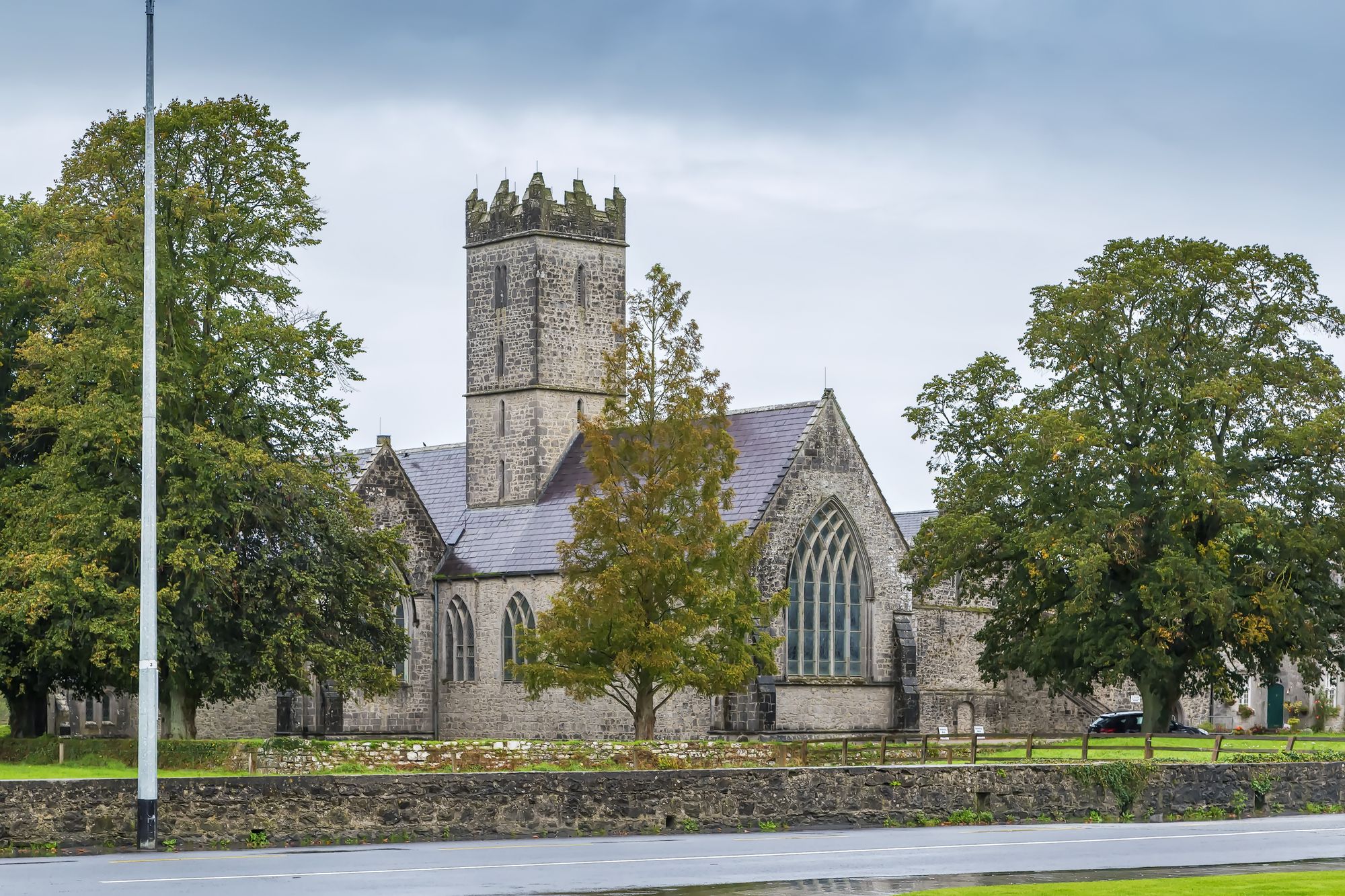
Adare
A heritage town on the tidal River Maigue, southwest of Limerick. The village centers on its medieval market, three monasteries, and the Desmond castle overlooking the ford.
Dorf · Co. Limerick
Foynes is a small Limerick town on the Shannon Estuary that served as a 1930s flying-boat terminal and now operates Ireland’s second-largest port.
Foynes (Faing in Irish) sits on the southern bank of the Shannon Estuary in County Limerick. The 2022 census counted 512 people there. That number makes it a small town in the proper sense, and the size is the point. The ocean met the estuary here, and the estuary met the town. The harbour, the water, and the crossing history all fit inside a short walk.
The town’s story is the story of the Atlantic. In the late 1930s and early 1940s, land-based planes could not cross the ocean. Flying boats were the way, with Foynes as the last eastern port of call. Charles Lindbergh made the survey flights for the operations in 1933. The terminal began in 1935. On 5 July 1937, the first transatlantic proving flights ran. A Pan Am Sikorsky S-42 left Botwood in Newfoundland, and a BOAC Short Empire left Foynes. The transits took twelve and fifteen-and-a-quarter hours. Services to New York, Southampton, Montreal, Poole and Lisbon followed. The first non-stop New York service ran on 22 June 1942, in twenty-five hours and forty minutes. During the war, the seaplane operations made Foynes one of the biggest civilian airports in Europe. Shannon Airport opened on the northern bank in 1942. The flying-boat days ended fast, and the station closed in 1946.
The port is the town’s working life now. It was first surveyed in 1837. The Shannon Foynes Port Company operates it as a major deep-water port. It is Ireland’s second-largest port facility, handling over ten million tonnes of cargo a year through six terminals. The water is the business, and the town is where the business happens.
Irish Coffee is claimed to have been invented in San Francisco, but it was first made at Foynes in 1943. Joe Sheridan, the chef and bartender of Brendan O’Regan’s, created it when asked to make something hot for passengers whose flying boats had been cancelled by fog. He took it to San Francisco a decade later, and the town still claims the origin.
Foynes is a stop on the estuary, not a destination that needs one. The harbour, the water, and the crossing history fit inside the hour. Pair it with Limerick city for the head of the estuary, or with the estuary drive for the whole water.
Übernachten
Stay in Limerick and the estuary, the port and the crossing are all inside the day.
Aktuelle Verfügbarkeit für Ihre Reisedaten. Verfügbarkeit und Preise stammen vom Anbieter, nicht von uns.
A heritage town on the tidal River Maigue, southwest of Limerick. The village centers on its medieval market, three monasteries, and the Desmond castle overlooking the ford.
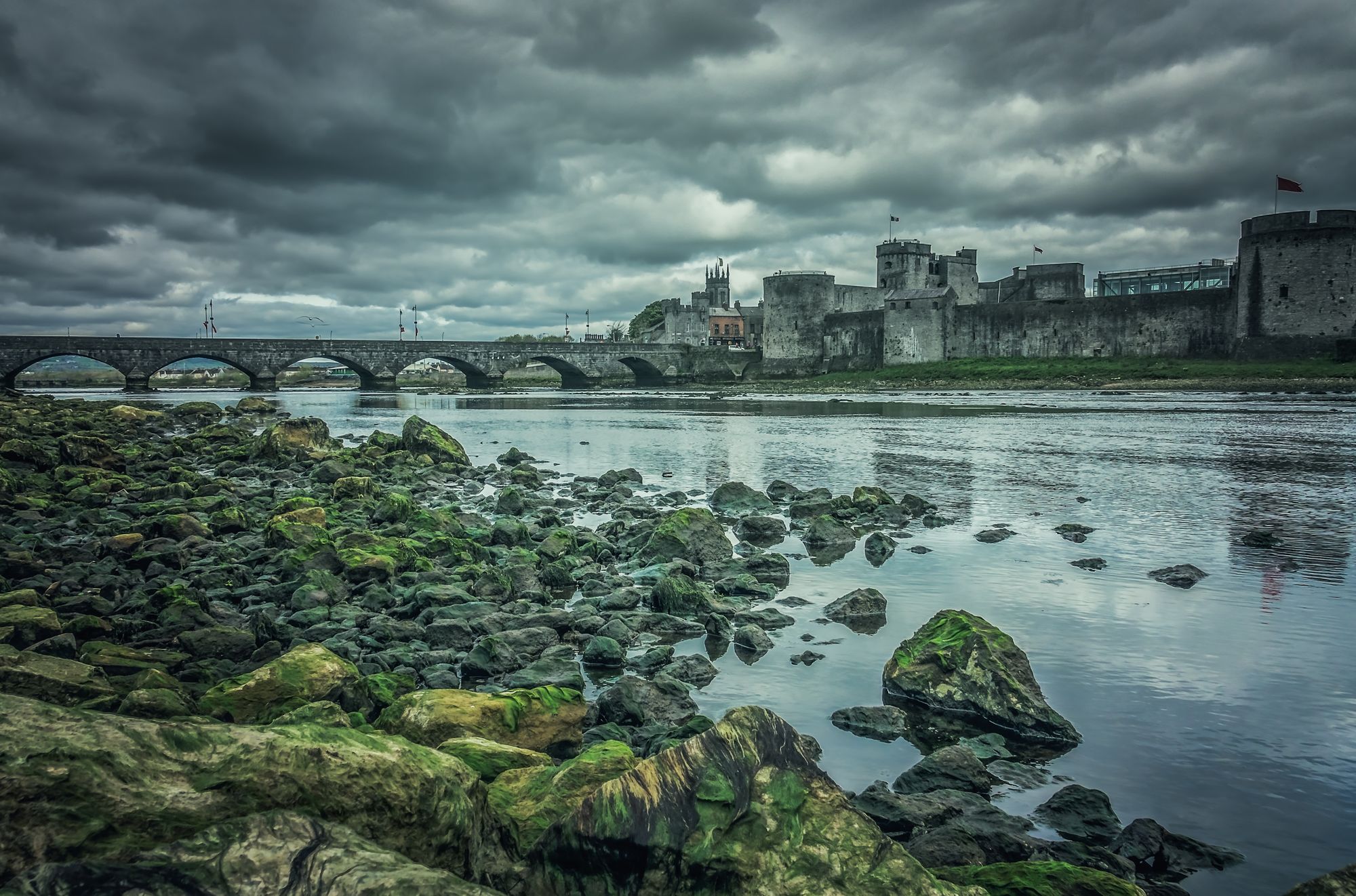
Limerick, founded in 812 by Vikings, is Ireland's third-largest urban area with a population of 102,287. The city straddles the Shannon River on King’s Island, serving as a practical hub for exploring the estuary and Golden Vale.
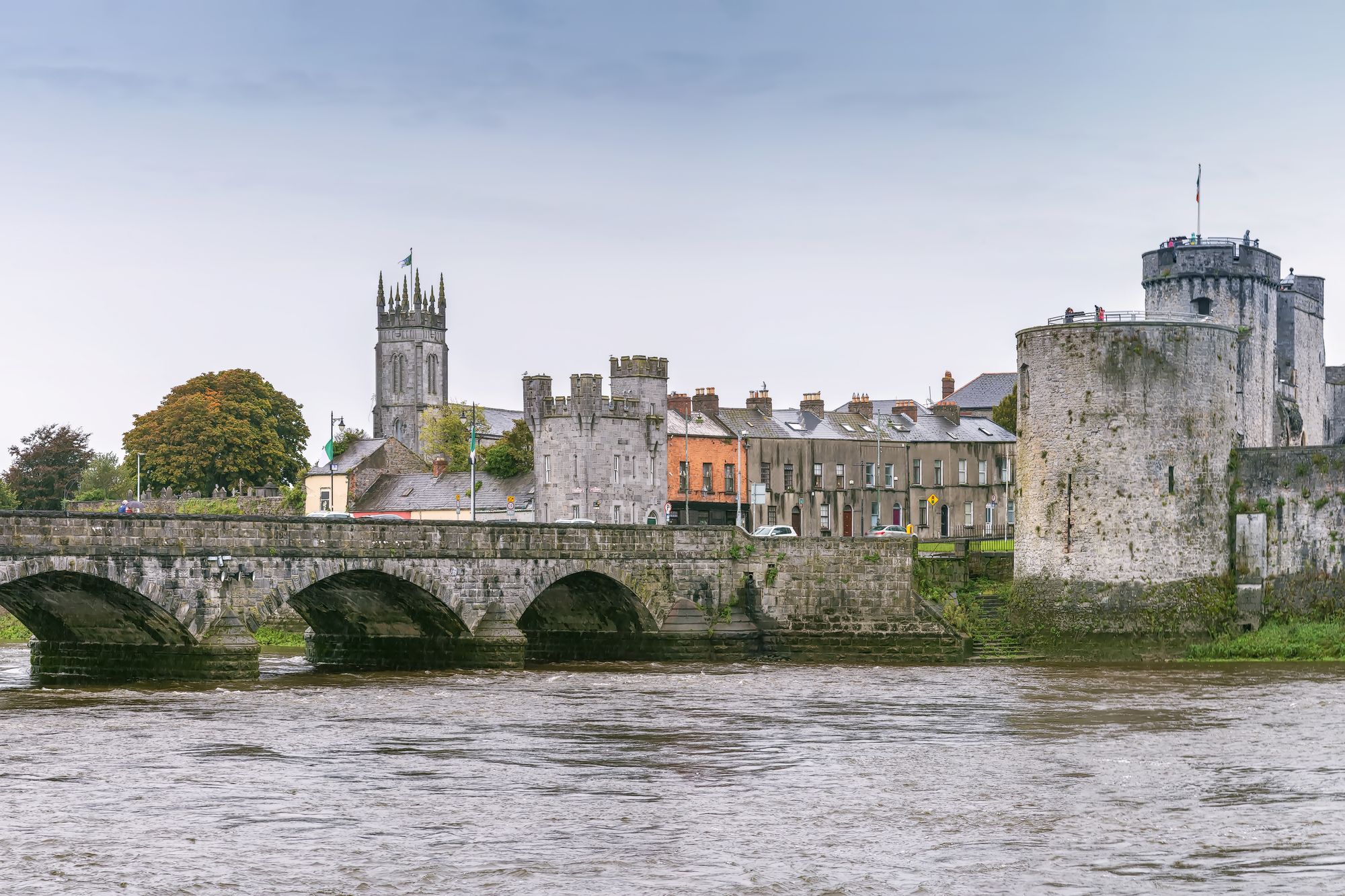
The Shannon is the longest river in the British Isles at 360 km, acting as a physical barrier between western and eastern Ireland. It offers a slow cruising route or a scenic drive, with Limerick marking the transition from river to sea.
The Shannon Estuary spans 102.1 km from Limerick to Loop Head and Kerry Head. Tides reach 5.44 metres, creating a spring-tide bore. Historic aviation terminals at Foynes and Rineanna mark its past as a transatlantic crossing point.