Attraction · Co. Galway
Kylemore Abbey
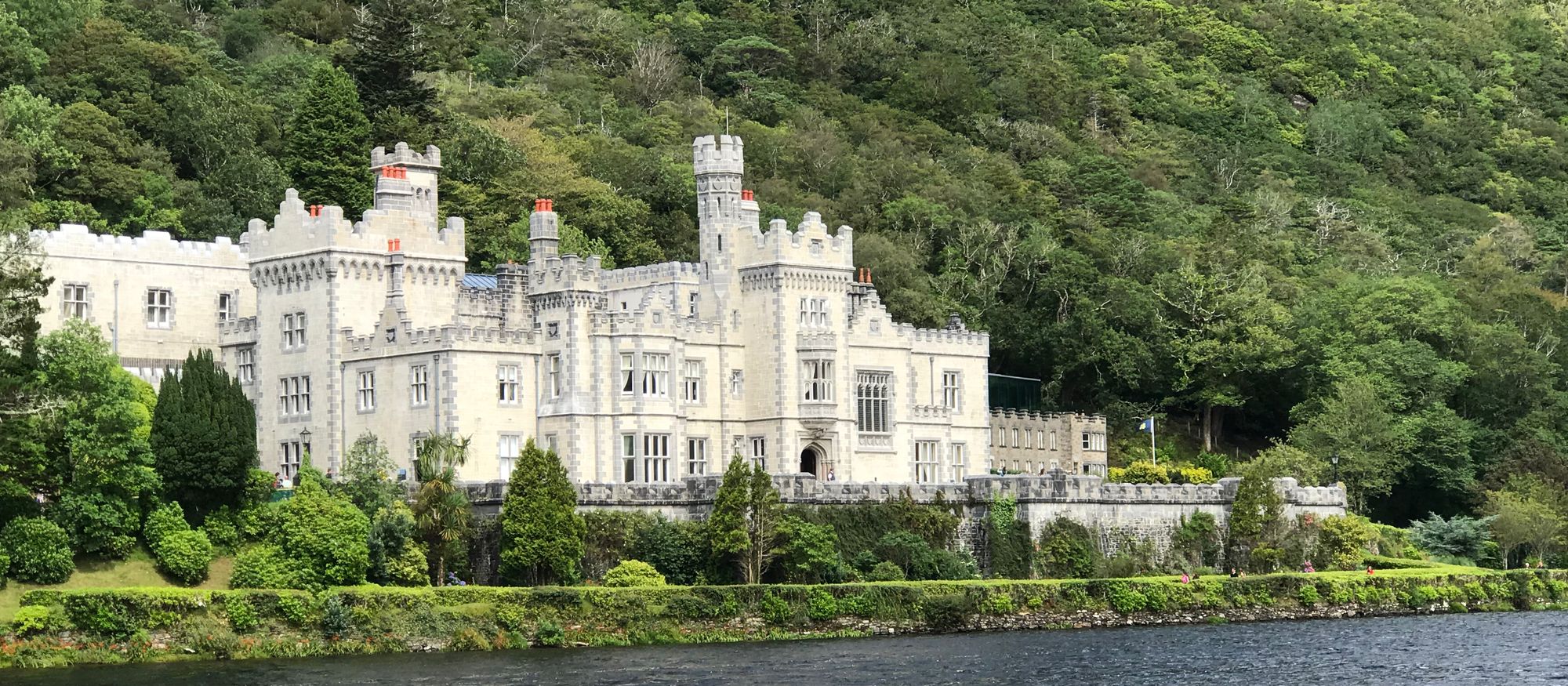
Kylemore Abbey in Connemara is a working Benedictine monastery and former castle on the N59. It offers ticketed gardens and castle tours, free shore views, and quiet church access near Letterfrack.
Island · Co. Galway
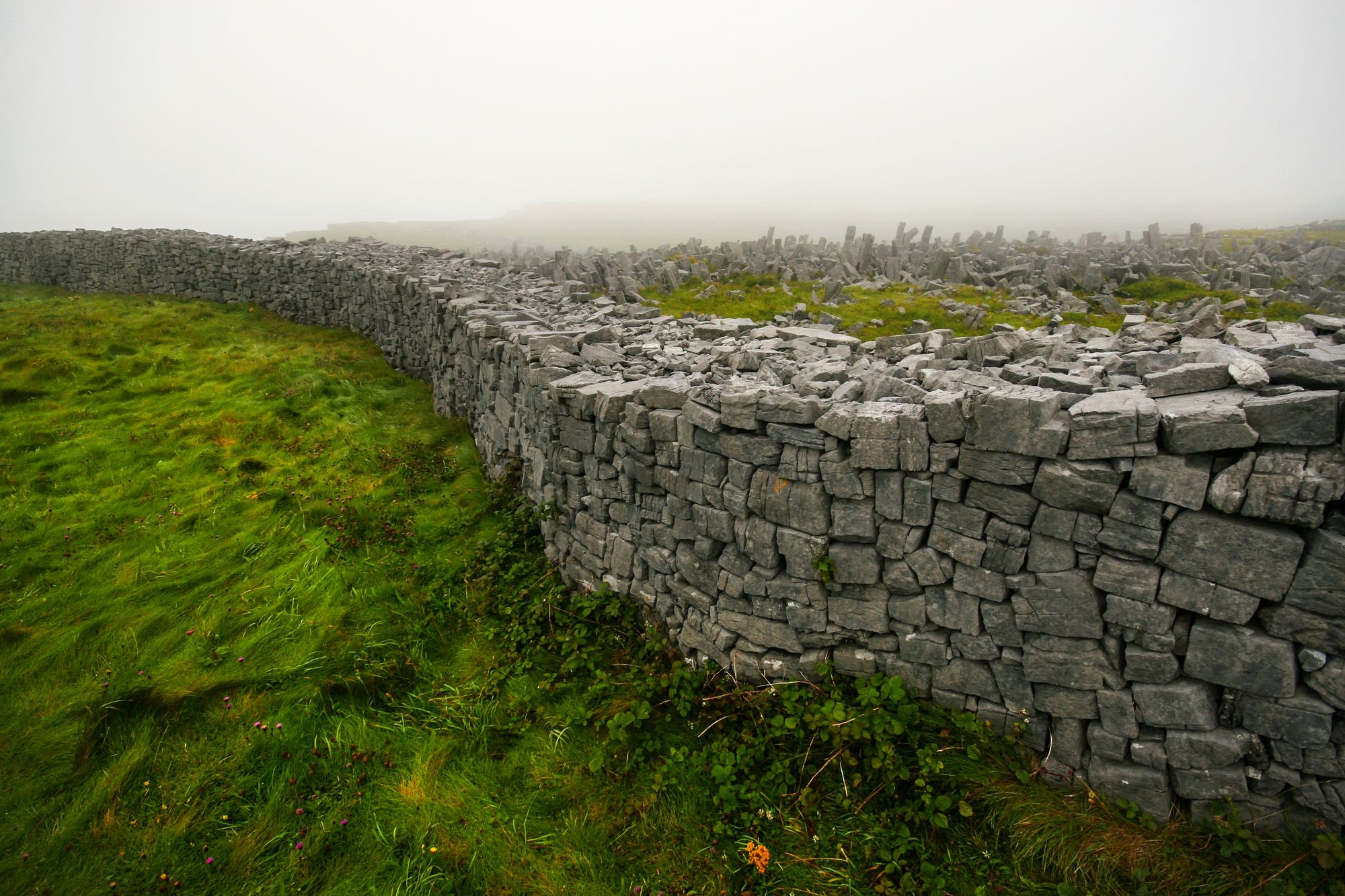
The three Aran Islands sit at the mouth of Galway Bay, defined by Carboniferous limestone and a Gaeltacht population. Dún Aonghasa, dating to 1100 BC, anchors the landscape, while year-round ferries leave from Rossaveal.
The Aran Islands, County Galway — photo by Lubo Ivanko
Oileáin Árann, or na hÁrainneacha (The Arans), sit at the mouth of Galway Bay. Off the west coast of Ireland, the group covers about 46 km². They make up the historic barony of Aran in County Galway.
From west to east, the order is:
Smaller islets dot the space between them. As of 2022, 1,347 people lived there. Irish is the primary language, placing the islands in the Gaeltacht, though most residents also speak English. The numbers have fallen since 1841, when the count was roughly 3,500.
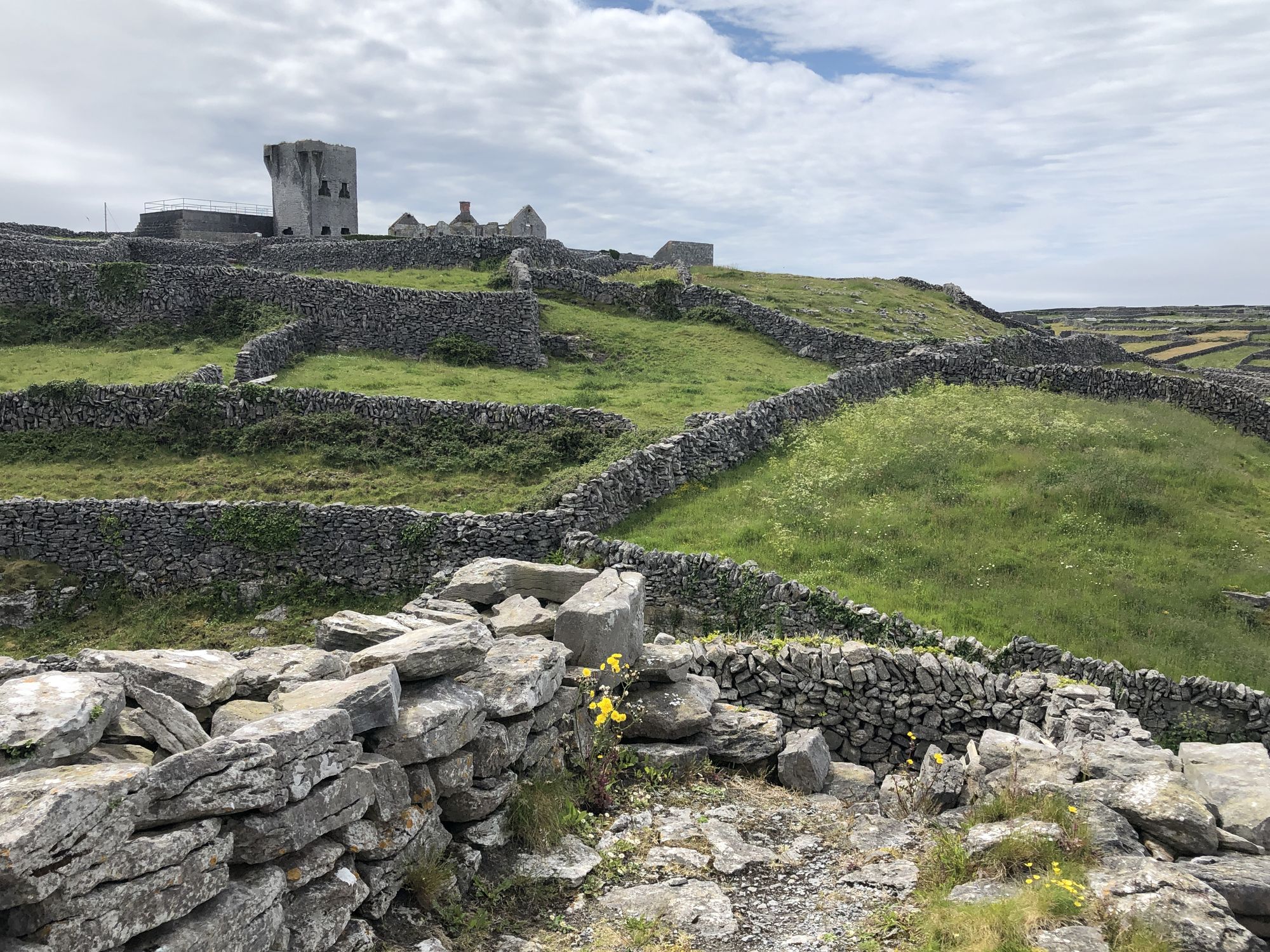
Carboniferous limestone forms the base. There is no natural topsoil. Early settlers added seaweed and shore sand to the soil. They built drystone walls to protect it. Those walls define the islands now. On Inishmore, great curving lines run down to the sea.
Seven prehistoric stone forts stand on the islands. Dún Aonghasa on Inishmore is the largest. It dates to 1100 BC. The hillfort sits on a cliff edge dropping into the Atlantic. The walk there is the main event on the island.
Enda of Aran founded the Killeany monastery on Inishmore in AD 490. It became a center for learning, piety, and asceticism. Tempull Breccain, the fifth-century Church of Saint Brecan, is also on Inishmore.
On Inisheer, the ringfort of Dún Formna turned into a castle. The O'Briens built it around the 15th century. O'Brien's Castle still stands on the hill above the village. Cromwell's soldiers later destroyed the castle. They also razed all but two of the seven churches established by Brecan. In 1693, the Jacobite privateer Thomas Vaughan briefly captured and held the islands.
Ferries run year-round to all three islands from Rossaveal in County Galway. A seasonal service operates from Doolin in County Clare. Inishmore needs a day or two to do properly. The forts, wall country, and light take time. Inisheer is a day trip. Inis Meáin is the one most people skip. It is the quietest of the three.
Where to stay
Guesthouses on Inis Mór or Inis Oírr put the forts, the wall country and the Atlantic light all within a walk.
See current availability for your dates. Availability and prices come from the accommodation provider, not from us.
Kylemore Abbey in Connemara is a working Benedictine monastery and former castle on the N59. It offers ticketed gardens and castle tours, free shore views, and quiet church access near Letterfrack.
Athenry, 25 km east of Galway, preserves its 13th-century layout, town wall, castle, and priory. The medieval town is also famous for the song "The Fields of Athenry."
Built in 1754 on Ballynahinch Lake, this former country house sits beneath Benlettery (557 metres) in County Galway. Once home to "Humanity Dick" and the Maharaja Jam Sahib, it operates today as a hotel within a private estate.
Carna is a Gaeltacht focal point in west Connemara, 74 km from Galway. It holds a Garda station, health centre, lifeboat, and university research facilities.